
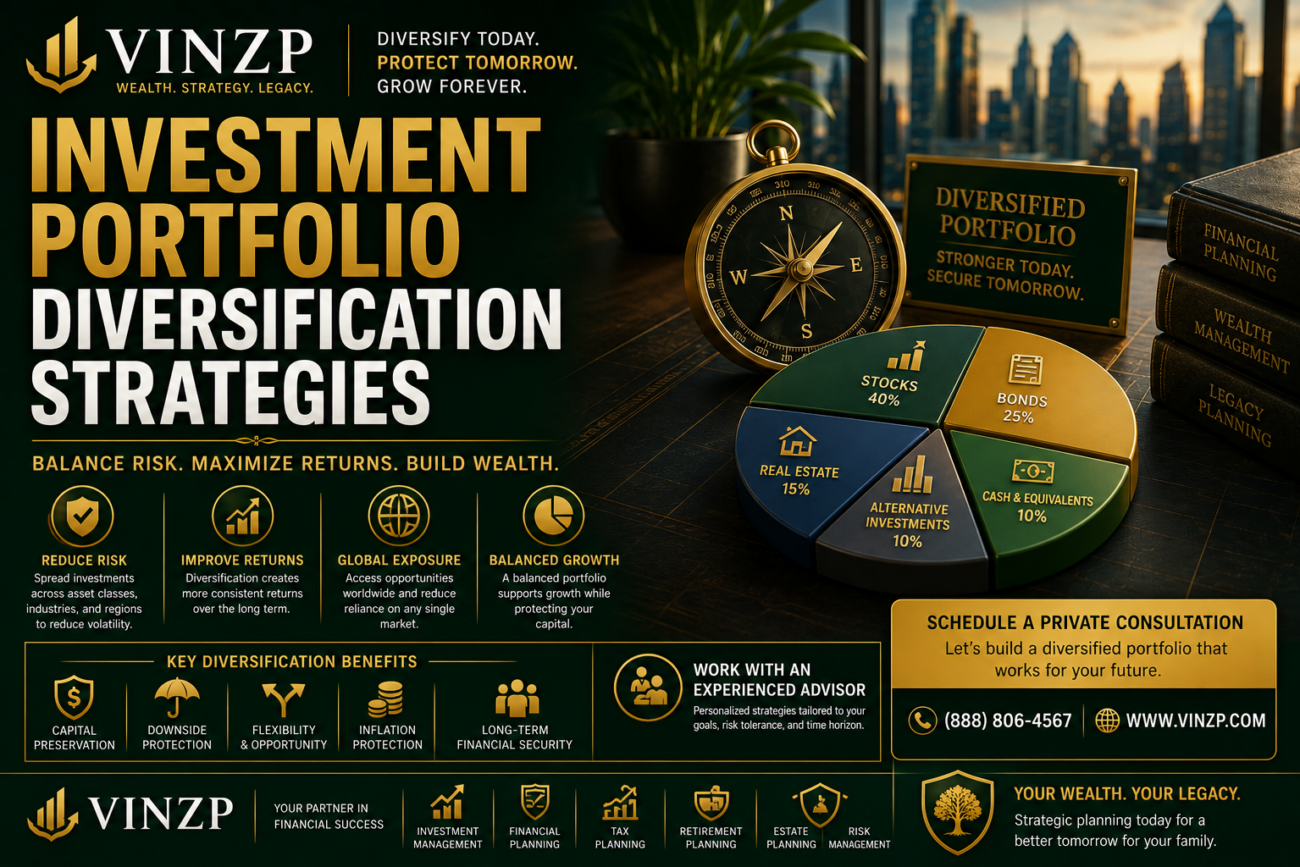
Investment Portfolio Diversification Strategies for Long-Term Growth
Successful investing is not simply about finding the highest-performing asset. It is about building a portfolio that can weather market fluctuations while continuing to grow over time. Investment portfolio diversification strategies help investors spread risk across multiple asset classes, industries, and geographic regions, creating a stronger foundation for sustainable wealth accumulation. Whether you are a business owner, executive, physician, entrepreneur, or retiree, diversification remains one of the most effective methods for protecting capital while pursuing consistent long-term returns. A well-diversified portfolio minimizes the impact of individual investment losses and provides greater financial stability during changing market conditions.Why Diversification Matters
Every investment carries some degree of risk. Concentrating too much wealth in a single stock, industry, or asset class exposes investors to unnecessary volatility. Diversification helps reduce this concentration risk by balancing investments across multiple opportunities.- Reduce overall portfolio risk.
- Create more consistent long-term returns.
- Protect wealth during market volatility.
- Improve capital preservation.
- Increase investment flexibility.
- Support long-term financial goals.
Investment Portfolio Diversification Strategies Explained
Asset Allocation
Asset allocation is the foundation of every diversified investment strategy. Investors typically divide portfolios among stocks, bonds, cash equivalents, real estate, and alternative investments according to their objectives, investment horizon, and risk tolerance.Geographic Diversification
Investing across domestic and international markets reduces dependence on the economic performance of one country. Global diversification provides additional growth opportunities while lowering regional concentration risk.Industry Diversification
Holding investments across sectors such as technology, healthcare, finance, consumer goods, industrials, and energy helps reduce the impact of downturns affecting individual industries.Alternative Investments
Private equity, infrastructure, commodities, hedge funds, and real estate investments often behave differently than traditional stocks and bonds, providing additional diversification benefits.Core Portfolio Components
| Asset Class | Primary Purpose |
|---|---|
| Stocks | Long-term capital growth |
| Bonds | Income and stability |
| Real Estate | Inflation protection |
| Cash | Liquidity |
| Alternative Assets | Risk diversification |
Managing Risk Through Diversification
Portfolio diversification should evolve alongside changing financial goals and market conditions. Regular portfolio reviews help ensure allocations remain aligned with long-term objectives while preventing excessive exposure to any single investment. Investors seeking professional guidance may also explore Private Investment Management Services for customized portfolio strategies.Tax-Efficient Investing
Diversification works best when combined with tax-efficient investment planning. Strategic asset placement, capital gains management, and retirement account optimization can significantly improve after-tax returns. High-income investors may also benefit from Tax Planning Services for High-Income Earners to coordinate investment and tax strategies.Common Diversification Mistakes
- Owning too many similar investments.
- Concentrating wealth in employer stock.
- Ignoring international exposure.
- Failing to rebalance regularly.
- Investing emotionally during market volatility.
- Neglecting long-term objectives.
Benefits of Professional Portfolio Management
Experienced financial advisors help investors develop disciplined investment strategies based on personal goals, income needs, risk tolerance, and market conditions. Professional portfolio management reduces emotional decision-making while improving long-term investment consistency.Frequently Asked Questions
What is portfolio diversification?
Portfolio diversification involves spreading investments across different asset classes, industries, and regions to reduce overall investment risk.How often should a portfolio be rebalanced?
Many financial professionals recommend reviewing portfolios annually or whenever allocations significantly drift from target levels.Does diversification guarantee profits?
No. Diversification cannot eliminate investment risk, but it can reduce concentration risk and improve long-term stability.Who benefits from diversification?
Nearly every investor can benefit from diversification, regardless of portfolio size or investment experience.Conclusion
Investment portfolio diversification remains one of the most reliable strategies for managing risk while pursuing sustainable long-term growth. By combining multiple asset classes, geographic regions, industries, and investment styles, investors can strengthen financial resilience and improve the likelihood of achieving long-term financial objectives. Working with experienced financial professionals helps ensure diversification strategies remain aligned with changing life goals and market conditions.Call to Action
Start building a stronger investment portfolio today with a customized diversification strategy designed to protect your wealth, improve long-term returns, and support lasting financial success.🔥 Canva Premium GRATIS 1 Bulan — FULL AKSES 🔥
⚠ Password hanya dibagikan di video ini:
👉 @OM Koboi
⏳ Tunggu 60 detik untuk membuka akses
🔐 Masukkan Password:
❌ Password salah. Periksa lagi dengan teliti.
💬 Sudah banyak yang berhasil akses ✔
⚠ Yang gagal biasanya tidak membaca dengan teliti
⚠ Yang gagal biasanya tidak membaca dengan teliti
