
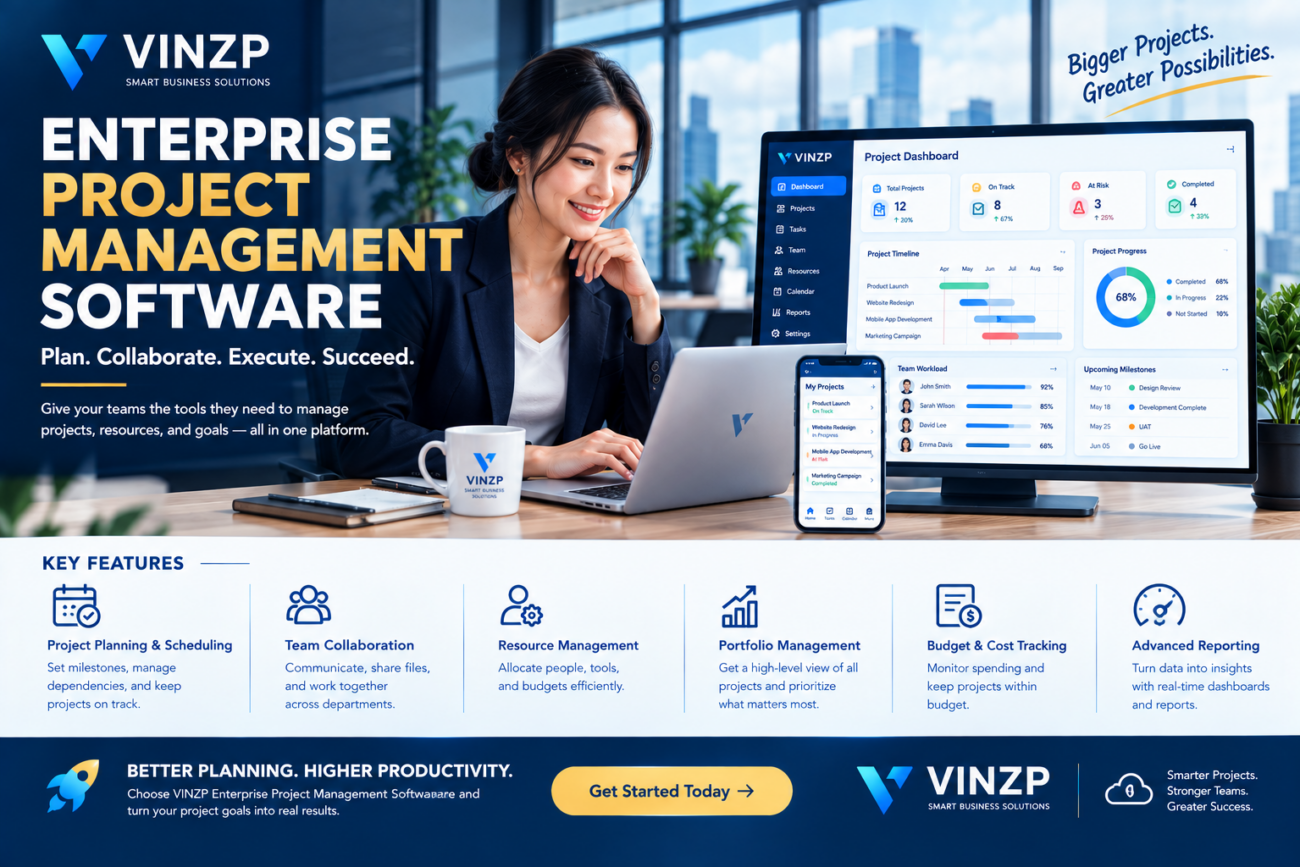
What Is Enterprise Project Management Software?
Enterprise project management software is a centralized technology platform designed to help large organizations manage projects and portfolios at scale. It typically combines project planning, task management, resource allocation, reporting, collaboration, documentation, and performance monitoring. Unlike basic task-management applications, enterprise platforms are designed for organizations with more complex structures. A single company may have hundreds of employees working on numerous projects simultaneously, with different managers, budgets, deadlines, and dependencies. A centralized platform can provide management with a broader view of these activities while allowing individual teams to focus on their own responsibilities.Why Businesses Need Enterprise Project Management Software
Large organizations often face a common problem: information becomes fragmented. One department may maintain a spreadsheet, another may use email updates, while another tracks deadlines through a separate application. This fragmentation makes it harder to determine which projects are on schedule, where resources are being used, and which tasks require immediate attention. A centralized project management platform can address these challenges by bringing important information together.1. Centralized Project Visibility
Project managers need accurate information to understand whether initiatives are progressing according to plan. Centralized dashboards can display project status, milestones, deadlines, task completion, and potential bottlenecks. Executives can also obtain a high-level portfolio view without requiring every project manager to prepare separate reports.2. Better Team Collaboration
Modern projects frequently involve employees from different departments. Marketing, finance, IT, operations, legal, sales, and external partners may all contribute to the same initiative. A shared workspace allows teams to communicate around projects, assign responsibilities, share documents, and monitor updates. This can reduce unnecessary email exchanges and make project information easier to locate.3. Improved Resource Planning
Employees, budgets, equipment, and other resources must be allocated carefully. Assigning too many projects to the same employees can create bottlenecks, while underutilized resources can increase operational costs. Resource planning features help managers understand workloads and identify potential capacity problems before they affect project delivery.4. More Consistent Processes
Enterprise organizations often manage similar projects across different departments. Without standardized processes, every team may create its own workflow. A centralized platform can provide templates, approval processes, project structures, and reporting standards. This creates greater consistency while still allowing individual teams to adapt workflows when necessary.Key Features to Look For
Choosing the right platform requires more than checking whether it can create tasks. Enterprise environments typically need a broader collection of capabilities.Project Planning and Scheduling
Project planning tools should allow teams to create milestones, deadlines, dependencies, and task assignments. Visual timelines can make complicated schedules easier to understand. Gantt-style planning is particularly useful for initiatives where one task cannot begin until another has been completed.Portfolio Management
Organizations often manage multiple projects at the same time. Portfolio management provides a broader perspective by allowing leadership to compare projects based on progress, priorities, resources, and expected business value. This helps decision-makers determine which initiatives deserve additional resources and which may need to be delayed or reconsidered.Resource Management
Resource management helps organizations monitor employee workloads and project requirements. Managers can identify capacity constraints and balance assignments across teams. Effective resource planning can also help prevent burnout caused by consistently assigning excessive workloads to high-performing employees.Budget and Cost Tracking
Project performance is not measured only by whether a deadline is met. Financial performance matters as well. Budget tracking allows project leaders to compare planned spending with actual costs. Early visibility into cost variations can make it easier to take corrective action before a project exceeds its approved budget.Reporting and Dashboards
Executives and project managers require different levels of information. A project manager may need detailed task data, while an executive may only need overall progress, budget status, major risks, and strategic milestones. Custom dashboards and reporting tools allow organizations to present information according to different roles and responsibilities.Document and Information Management
Projects generate contracts, proposals, specifications, presentations, reports, meeting notes, and other documents. Keeping these resources organized is essential for productivity. A centralized project workspace can make important documents easier to locate while reducing the risk of employees working from outdated versions.How to Choose the Right Platform
Every enterprise has different requirements. A platform that works well for a software company may not be ideal for a construction organization, consulting firm, healthcare provider, or financial services business. Before selecting a solution, organizations should evaluate their current processes and identify the problems they want technology to solve.Assess Your Organization’s Project Complexity
Start by identifying the number of active projects, departments involved, users, stakeholders, and external collaborators. Companies managing dozens or hundreds of concurrent initiatives may require more advanced portfolio and resource-management capabilities.Evaluate Integration Capabilities
Project management should not create another information silo. Look for platforms that can integrate with existing communication, accounting, customer relationship management, document storage, identity, and productivity systems. Strong integrations can reduce duplicate data entry and create smoother workflows between departments.Consider Security and Access Controls
Enterprise projects may contain confidential financial information, customer data, intellectual property, contracts, and strategic plans. Security should therefore be considered before implementation. Organizations should evaluate authentication options, user permissions, data protection, audit capabilities, and administrative controls according to their internal requirements.Prioritize Scalability
A platform should support organizational growth rather than become a limitation. Consider how easily the system can accommodate additional employees, projects, departments, locations, and workflows. Scalability is especially important for companies expecting rapid expansion or managing projects across multiple regions.Benefits for Project Managers and Executives
The value of a centralized project environment extends beyond individual task management.| Business Area | Potential Improvement |
|---|---|
| Planning | Clearer milestones, schedules, and dependencies |
| Collaboration | Centralized communication and project information |
| Resources | Better visibility into workloads and capacity |
| Budget | Improved monitoring of planned and actual spending |
| Reporting | Faster access to project and portfolio insights |
| Risk Management | Earlier identification of delays and bottlenecks |
Common Mistakes During Implementation
Technology alone does not guarantee better project performance. Implementation strategy is equally important.- Choosing features over business needs: A platform can have hundreds of features but still fail to solve the organization’s most important problems.
- Ignoring user adoption: If employees find the system difficult to use, teams may return to spreadsheets and informal communication.
- Overcomplicating workflows: Excessive fields, approvals, and processes can slow projects rather than improve control.
- Failing to establish standards: Different departments may use the platform inconsistently without clear governance.
- Neglecting training: Users should understand not only how the platform works, but why the organization is adopting it.
Enterprise Project Management Software and Business Growth
As companies expand, operational complexity usually increases. More employees, customers, projects, locations, and strategic initiatives create additional coordination requirements. A centralized project environment can help businesses maintain visibility as complexity grows. Instead of relying on individual employees to maintain separate systems, organizations can establish common processes and shared reporting structures. This can be particularly valuable for leadership teams that need to connect day-to-day project execution with broader business objectives. The most effective approach is to treat project management technology as part of an organization’s operating model rather than simply another productivity application.Frequently Asked Questions
What is enterprise project management software used for?
It is used to plan, coordinate, monitor, and report on complex projects across departments, teams, and business units. Common capabilities include scheduling, resource management, collaboration, budgeting, reporting, and portfolio oversight.How is enterprise project management different from task management?
Task management generally focuses on individual activities and smaller teams. Enterprise platforms typically provide broader capabilities for portfolios, resources, budgets, dependencies, governance, reporting, and organizational collaboration.Can project management software improve team productivity?
It can improve productivity by reducing fragmented information, clarifying responsibilities, improving visibility, and automating certain administrative activities. Actual results depend on implementation and user adoption.Is cloud-based project management suitable for large organizations?
Cloud platforms can be suitable for large organizations when they meet the company’s security, compliance, integration, performance, and access-control requirements. Organizations should evaluate these factors before deployment.What should companies consider before purchasing a platform?
Companies should evaluate project complexity, scalability, integrations, security, reporting, resource management, usability, implementation requirements, and total cost of ownership.Build a More Connected Project Environment
Successful enterprise projects require more than deadlines and task lists. They depend on clear communication, effective resource allocation, reliable information, and timely decision-making. The right technology can bring these elements together in one structured environment, giving teams the tools they need to coordinate work while providing leadership with greater visibility into organizational performance. Businesses evaluating a new project management platform should begin with their operational challenges, define measurable objectives, and then select technology that supports those goals. With the right strategy, centralized project management can become an important foundation for efficiency, accountability, and sustainable growth.Ready to Improve Project Visibility?
Explore a smarter approach to managing complex projects, coordinating teams, and gaining better visibility across your organization. The right digital workflow can help your business move from fragmented project tracking toward a more connected and efficient operating environment.📌 Password available in the YouTube video: @Resa Coco — Join the Team Below ✅
⏳ Please wait 60 seconds to unlock access
Incorrect password. Please try again carefully.
💬 Have any tips or feedback? Feel free to share in the comments below!
📢 Support & Community Access
Join our community for guidance, troubleshooting, and the latest updates.
