
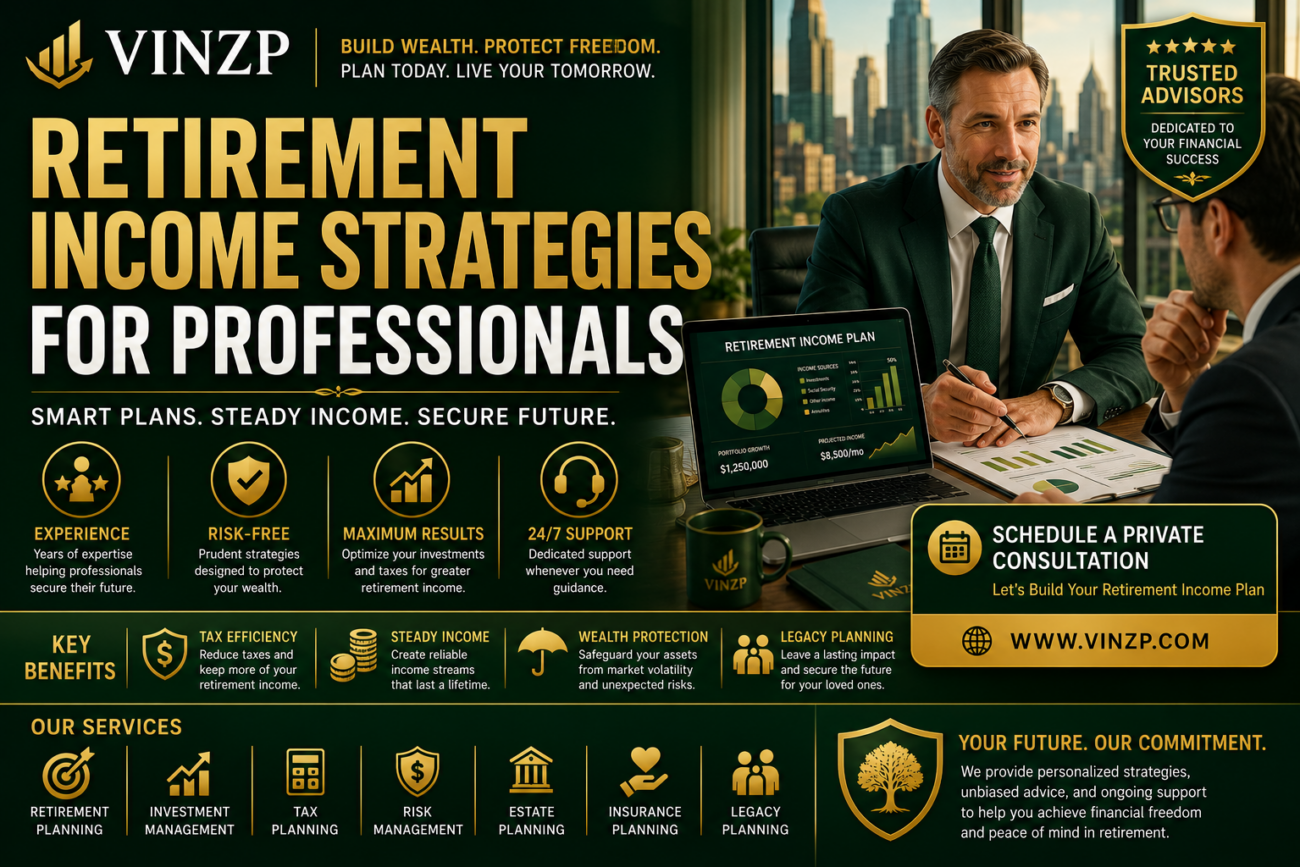
Retirement Income Strategies for Professionals
Professionals spend decades building successful careers, earning competitive salaries, and accumulating retirement assets. However, creating wealth during a career is only part of the journey. Converting accumulated savings into a reliable, tax-efficient income stream is equally important. Effective retirement income planning helps ensure financial stability while maintaining the lifestyle you have worked hard to achieve. Whether you are a physician, attorney, executive, engineer, consultant, or business owner, retirement planning requires more than selecting investment products. It involves coordinating investment management, tax strategies, Social Security timing, healthcare planning, inflation protection, estate planning, and risk management into one comprehensive financial strategy.Why Retirement Income Planning Matters
Many professionals focus heavily on growing investment portfolios but spend little time developing an income strategy for retirement. Without proper planning, retirees may withdraw money inefficiently, increase tax liabilities, or deplete assets faster than expected.- Create sustainable lifetime income.
- Reduce unnecessary taxes.
- Protect purchasing power against inflation.
- Manage investment risk.
- Prepare for healthcare expenses.
- Leave a financial legacy.
Understanding Retirement Income Sources
Employer Retirement Plans
401(k), 403(b), and similar employer-sponsored plans remain primary retirement savings vehicles. Maximizing contributions during working years creates a strong foundation for future retirement income.Individual Retirement Accounts
Traditional and Roth IRAs provide additional tax advantages while increasing retirement flexibility.Investment Portfolios
Dividend-paying stocks, bonds, ETFs, mutual funds, and alternative investments provide diversified income opportunities while helping preserve long-term capital.Social Security Benefits
Choosing when to begin receiving Social Security benefits can significantly affect lifetime retirement income. Delaying benefits often increases monthly payments.Building a Sustainable Withdrawal Strategy
A structured withdrawal strategy helps balance income needs with long-term portfolio sustainability. Rather than withdrawing fixed amounts without planning, retirees should adjust distributions according to market performance, spending needs, inflation, and tax considerations.| Income Source | Primary Benefit |
|---|---|
| 401(k) | Tax-deferred retirement savings |
| IRA | Flexible retirement planning |
| Investment Portfolio | Growth and income |
| Social Security | Guaranteed lifetime income |
| Annuities | Predictable income payments |
Tax-Efficient Retirement Planning
Taxes play a major role in retirement success. Strategic withdrawals from taxable, tax-deferred, and tax-free accounts may significantly improve after-tax income throughout retirement. Professionals seeking broader financial guidance may also benefit from reviewing tax planning strategies for high-income earners.Protecting Retirement Wealth
Preserving wealth requires diversification, disciplined investing, appropriate insurance coverage, and regular financial reviews. Protecting accumulated assets is just as important as growing them. Many affluent professionals also explore fiduciary financial advisor for retirement planning services to develop customized long-term strategies.Common Retirement Planning Mistakes
- Retiring without an income strategy.
- Claiming Social Security too early.
- Ignoring inflation.
- Overlooking healthcare expenses.
- Failing to diversify investments.
- Neglecting estate planning.
Benefits of Professional Retirement Planning
Working with an experienced financial advisor provides personalized guidance tailored to your goals, risk tolerance, tax situation, and retirement timeline. A coordinated strategy helps maximize retirement income while reducing financial uncertainty.Frequently Asked Questions
When should professionals begin retirement planning?
Ideally, retirement planning should begin as early as possible to maximize compound growth and investment opportunities.How much retirement income will I need?
Many professionals aim to replace approximately 70%–90% of their pre-retirement income, although individual needs vary.Should retirement investments become more conservative?
Asset allocation should gradually adjust based on age, objectives, and risk tolerance while maintaining growth potential.Can tax planning improve retirement income?
Yes. Strategic withdrawal planning and tax-efficient investing often increase after-tax retirement income.Conclusion
Retirement represents a new financial chapter that requires careful preparation. Professionals who develop comprehensive retirement income strategies are better positioned to enjoy financial independence, preserve wealth, reduce taxes, and confidently support future lifestyle goals. Early planning combined with disciplined investing creates a strong foundation for long-term retirement success.Call to Action
Start building your retirement income strategy today by working with a trusted financial professional who can help protect your wealth, optimize taxes, and create dependable lifetime income.🔥 Canva Premium GRATIS 1 Bulan — FULL AKSES 🔥
⚠ Password hanya dibagikan di video ini:
👉 @OM Koboi
⏳ Tunggu 60 detik untuk membuka akses
🔐 Masukkan Password:
❌ Password salah. Periksa lagi dengan teliti.
💬 Sudah banyak yang berhasil akses ✔
⚠ Yang gagal biasanya tidak membaca dengan teliti
⚠ Yang gagal biasanya tidak membaca dengan teliti
