
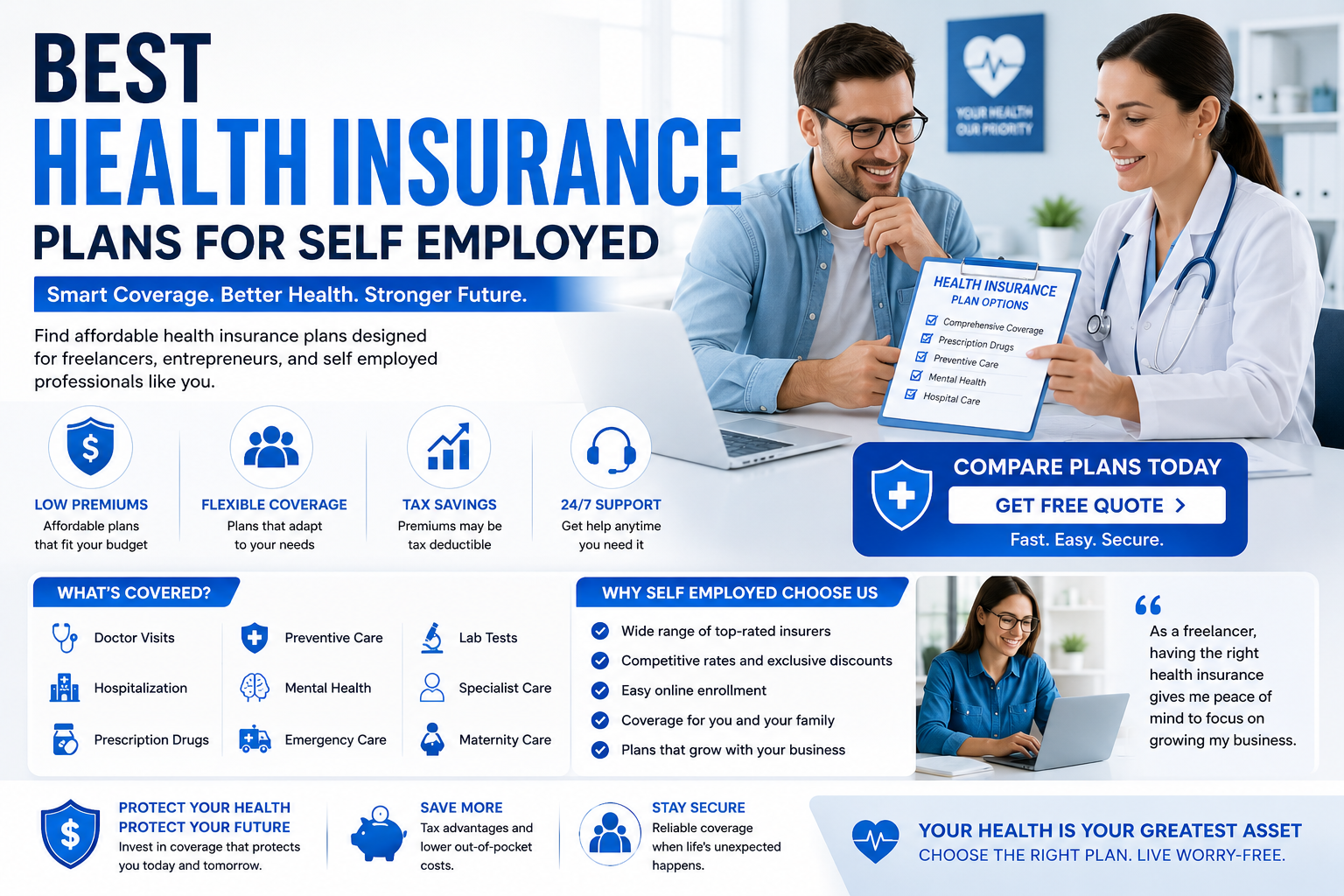
Best Health Insurance Plans for Self Employed Professionals
Healthcare costs continue to rise across the United States, making insurance coverage more important than ever for freelancers, entrepreneurs, gig workers, and independent contractors. Finding the best health insurance plans for self employed individuals can feel overwhelming because there are hundreds of providers, policy options, deductibles, and premium structures available. Unlike traditional employees who receive insurance through employers, self employed professionals must carefully compare plans on their own. Choosing the wrong policy could result in high out-of-pocket expenses, limited doctor networks, or inadequate emergency coverage. This complete guide explains how to compare coverage, reduce monthly costs, maximize tax advantages, and choose the right policy for your healthcare needs in 2026.
Why Health Insurance Matters for Self Employed Workers
Many independent workers delay purchasing insurance because monthly premiums seem expensive. However, one unexpected hospitalization or medical emergency can create massive debt without proper protection. Health insurance helps cover:
- Emergency room visits
- Hospitalization
- Prescription medications
- Preventive healthcare
- Mental health treatment
- Specialist consultations
- Diagnostic testing
- Surgery and rehabilitation
Freelancers often experience inconsistent income, making financial protection even more critical during medical emergencies.
Who Needs Individual Health Insurance?
Health insurance is essential for:
- Freelancers
- Consultants
- Digital nomads
- Small business owners
- Independent contractors
- Gig economy workers
- Real estate agents
- Self employed creatives
- Online entrepreneurs
Types of Health Insurance Plans Available
Understanding different policy types helps self employed individuals make smarter decisions.
Health Maintenance Organization (HMO)
HMO plans usually offer lower monthly premiums but require patients to use in-network doctors and obtain referrals for specialists. Pros:
- Affordable premiums
- Lower out-of-pocket costs
- Coordinated care system
Cons:
- Limited provider flexibility
- Referral requirements
Preferred Provider Organization (PPO)
PPO plans provide greater flexibility and broader doctor networks. Pros:
- No specialist referrals
- Out-of-network coverage
- Flexible provider choices
Cons:
- Higher premiums
- Higher deductibles
High Deductible Health Plans (HDHP)
HDHP plans typically have lower monthly premiums but higher deductibles. These plans are commonly paired with Health Savings Accounts (HSAs), allowing tax-advantaged medical savings.
Catastrophic Coverage Plans
Designed primarily for emergencies, catastrophic plans offer low monthly costs but high deductibles.
How to Choose the Best Health Insurance Plans for Self Employed Individuals
Evaluate Monthly Premiums
The premium is the monthly amount paid for coverage. Lower premiums may appear attractive but can lead to higher deductibles later.
Compare Deductibles Carefully
A deductible is the amount you pay before insurance coverage begins. Freelancers with regular healthcare needs may benefit from lower deductibles despite higher monthly premiums.
Check Provider Networks
Always verify whether your preferred doctors, specialists, and hospitals are included in the provider network.
Analyze Prescription Drug Coverage
Medication costs vary dramatically between plans. Review formularies before enrolling.
Consider Mental Health Benefits
Mental wellness services are increasingly important for entrepreneurs facing stress and burnout. Many self employed individuals also seek emotional support services through resources like mental health residential treatment center programs and PTSD treatment center for adults resources.
Best Features to Look for in 2026 Health Plans
Telehealth Services
Virtual healthcare appointments reduce travel costs and improve accessibility.
Preventive Care Coverage
Preventive screenings, annual checkups, and vaccines help avoid expensive long-term health issues.
Flexible Specialist Access
Some plans allow direct specialist appointments without referrals.
Prescription Discounts
Comprehensive pharmacy benefits can significantly reduce medication expenses.
Health Savings Account Compatibility
HSAs provide triple tax advantages for eligible self employed individuals.
Tax Benefits for Self Employed Health Insurance
One major advantage of purchasing individual health insurance is the potential tax deduction. Self employed workers may deduct:
- Monthly insurance premiums
- Dental insurance
- Qualified long-term care insurance
- Coverage for spouses and dependents
Tax savings can significantly reduce the effective cost of insurance. Many freelancers also use professional financial services such as tax planning services for high income earners and asset protection financial planning USA to optimize overall finances.
Common Mistakes to Avoid
Choosing Based Only on Price
The cheapest plan is not always the best value. Extremely low-cost plans may offer limited benefits or high out-of-pocket exposure.
Ignoring Network Restrictions
Out-of-network medical care can become extremely expensive.
Underestimating Healthcare Usage
Many healthy individuals forget that accidents and emergencies are unpredictable.
Skipping Preventive Coverage
Preventive healthcare often reduces long-term medical expenses.
How Technology Is Changing Health Insurance
Insurance providers now use AI-driven tools to simplify claims, enrollment, and customer support. Modern healthcare systems increasingly integrate technologies like AI analytics platform solutions and workflow automation software to improve customer experiences and operational efficiency.
Digital Health Platforms
Mobile apps allow users to:
- Track claims
- View deductibles
- Access ID cards
- Book appointments
- Communicate with providers
Future Trends in Self Employed Health Insurance
The insurance market continues evolving rapidly as more people enter freelance and remote work environments. Future trends include:
- Expanded telemedicine coverage
- Personalized healthcare plans
- AI-powered claims processing
- Subscription-style healthcare services
- Preventive wellness incentives
- Digital-first insurance providers
Final Thoughts
Finding the best health insurance plans for self employed professionals requires balancing affordability, provider access, deductibles, and long-term protection. While monthly premiums may initially seem expensive, proper health coverage protects freelancers and entrepreneurs from devastating medical costs and financial uncertainty. Comparing plans carefully, understanding tax advantages, and evaluating healthcare needs can help independent workers make smarter insurance decisions in 2026.
Frequently Asked Questions
What is the cheapest health insurance option for self employed workers?
Catastrophic plans and high deductible plans often provide the lowest monthly premiums, though coverage may be limited.
Can freelancers qualify for ACA subsidies?
Yes, many freelancers qualify for premium tax credits depending on income level and household size.
Are health insurance premiums tax deductible?
In many situations, self employed individuals can deduct health insurance premiums from taxable income.
Is PPO or HMO better for freelancers?
PPO plans offer greater flexibility, while HMOs usually provide lower monthly costs.
Should healthy self employed workers buy insurance?
Yes. Medical emergencies are unpredictable, and insurance protects against catastrophic financial risk.
Protect Your Health and Financial Future Today
Healthcare expenses can destroy savings quickly without proper protection. Don’t wait until a medical emergency happens before securing reliable coverage. Compare the best self employed health insurance plans today and find affordable protection designed for freelancers, entrepreneurs, and independent professionals.
🔥 Canva Premium GRATIS 1 Bulan — FULL AKSES 🔥
⚠ Password hanya dibagikan di video ini:
👉 @OM Koboi
🔐 Masukkan Password:
⚠ Yang gagal biasanya tidak membaca dengan teliti
