
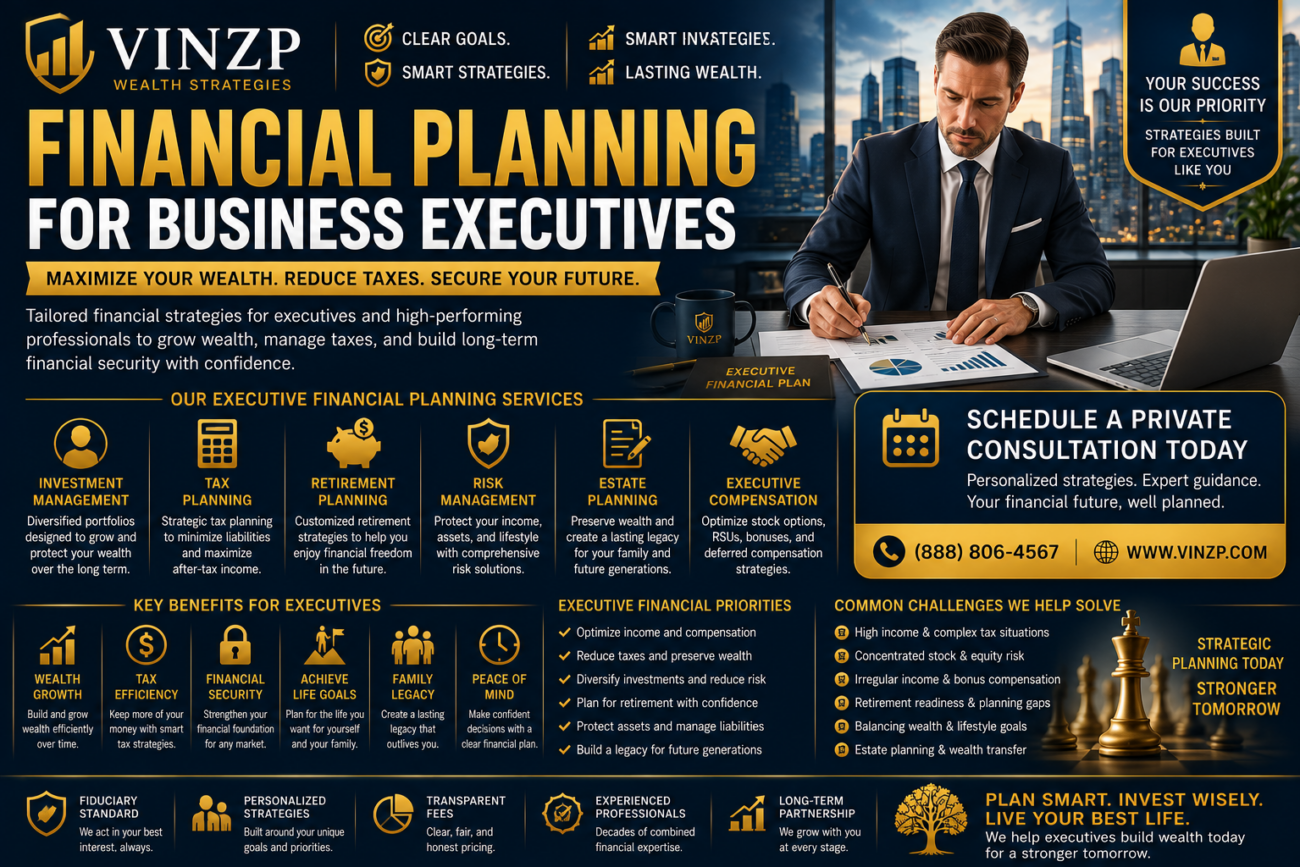
Financial Planning for Business Executives
Business executives often face complex financial challenges that extend far beyond managing a salary. Equity compensation, executive bonuses, stock options, retirement benefits, tax exposure, and concentrated investment positions require a comprehensive financial strategy. Financial planning for business executives combines investment management, tax optimization, retirement planning, estate planning, and risk management into a personalized roadmap designed to preserve wealth while supporting long-term financial goals.
Whether serving as a CEO, CFO, senior manager, or corporate executive, proactive financial planning allows professionals to maximize earnings, protect assets, and prepare for retirement with greater confidence. Rather than reacting to financial events, executives benefit from a long-term strategy that adapts to changing market conditions and career milestones.
Why Financial Planning Is Essential
Executive compensation packages often include multiple income sources that require careful coordination. Without proper planning, taxes, investment concentration, and inefficient retirement strategies may reduce long-term wealth.
- Build sustainable long-term wealth.
- Reduce tax liabilities.
- Diversify concentrated investments.
- Create retirement income.
- Protect personal assets.
- Develop a lasting family legacy.
Core Financial Planning for Business Executives
Investment Portfolio Management
A diversified investment portfolio helps balance growth opportunities with risk management. Executives often accumulate company stock, making diversification an important component of long-term financial stability.
Tax Planning
Effective tax planning coordinates executive compensation, investment gains, retirement contributions, charitable giving, and capital gains management to improve after-tax wealth accumulation.
Retirement Planning
High-income professionals require customized retirement strategies that integrate employer-sponsored plans, IRAs, taxable investments, and long-term income planning.
Risk Management
Insurance planning, emergency reserves, disability coverage, and asset protection strategies help safeguard accumulated wealth throughout every stage of an executive career.
Executive Financial Planning Components
| Planning Area | Primary Benefit |
|---|---|
| Investment Management | Long-term wealth growth |
| Tax Planning | Improve after-tax returns |
| Retirement Planning | Reliable retirement income |
| Estate Planning | Protect family wealth |
| Asset Protection | Reduce financial risk |
Managing Executive Compensation
Stock options, restricted stock units (RSUs), deferred compensation plans, bonuses, and performance incentives should be coordinated within an overall financial strategy. Diversification and tax planning reduce concentration risk while improving long-term financial flexibility.
Executives seeking customized portfolio strategies may also benefit from Private Investment Management Services for long-term wealth management.
Long-Term Wealth Preservation
Preserving wealth requires more than strong investment performance. Estate planning, tax optimization, charitable strategies, insurance planning, and periodic financial reviews all contribute to protecting assets for future generations.
Additional guidance is available through Family Office Wealth Management Services for executives with complex financial needs.
Common Financial Planning Mistakes
- Holding excessive employer stock.
- Ignoring tax planning opportunities.
- Delaying retirement planning.
- Failing to diversify investments.
- Neglecting estate planning.
- Not reviewing financial plans regularly.
Benefits of Professional Financial Advice
Experienced financial advisors coordinate investments, taxes, retirement, insurance, and estate planning into a single integrated strategy. This holistic approach helps executives make informed financial decisions while adapting to changing personal and professional circumstances.
Frequently Asked Questions
Why do business executives need specialized financial planning?
Executive compensation structures are often more complex than traditional salary arrangements and require coordinated tax, investment, and retirement strategies.
How often should executives review financial plans?
Annual reviews are recommended, with additional updates following promotions, compensation changes, or major life events.
Should executives diversify company stock?
Maintaining a diversified investment portfolio generally helps reduce concentration risk and improve long-term financial stability.
Can financial planning reduce taxes?
Strategic tax planning can improve after-tax wealth through retirement contributions, investment management, charitable planning, and coordinated withdrawal strategies.
Conclusion
Financial planning empowers business executives to maximize career success while building lasting personal wealth. By integrating investment management, tax planning, retirement preparation, estate planning, and risk management into one comprehensive strategy, executives can confidently pursue financial independence and protect their legacy for future generations.
Call to Action
Partner with a trusted financial planning professional today to develop a customized strategy that helps grow your wealth, reduce taxes, and secure your long-term financial future.
