
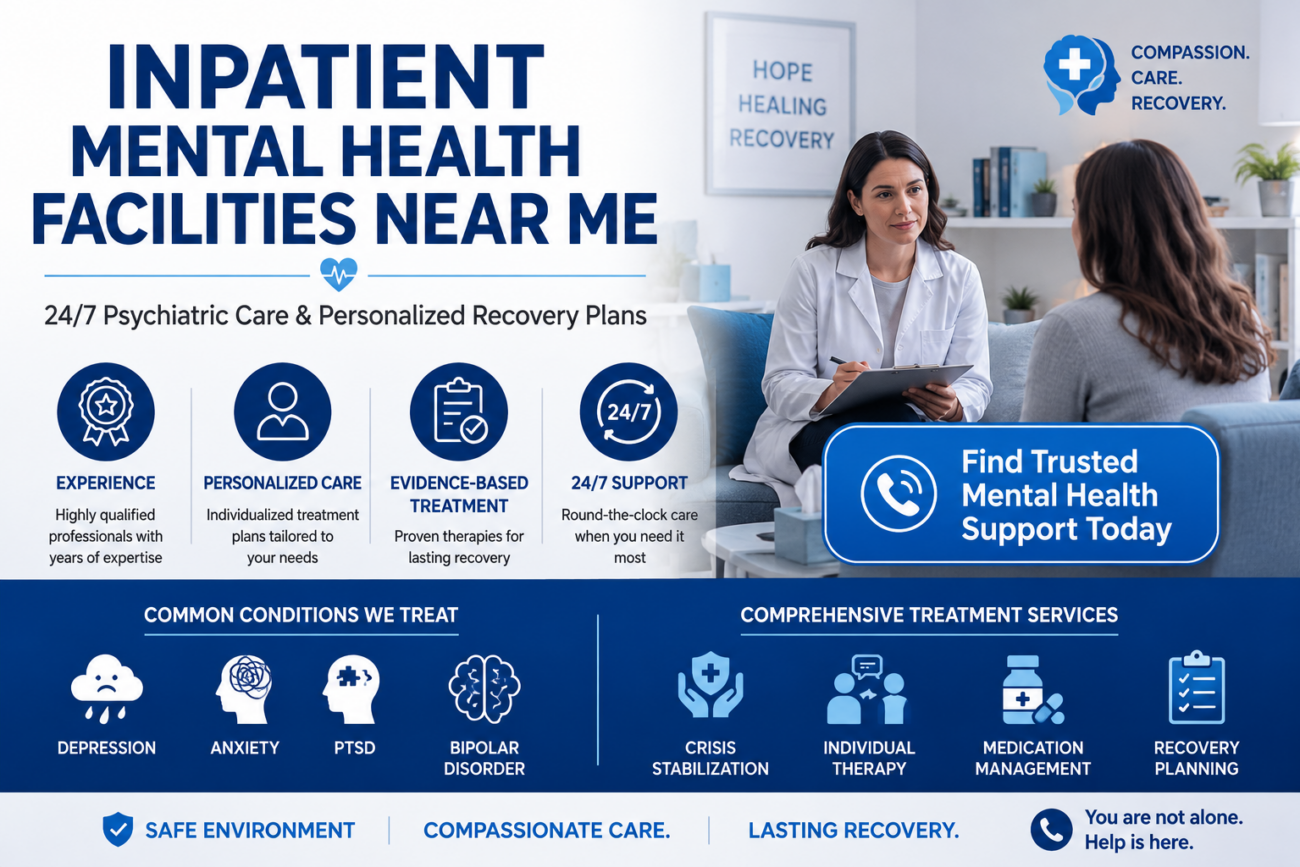
Inpatient Mental Health Facilities Near Me: Complete Guide to Finding the Right Care
Searching for inpatient mental health facilities near me often happens during one of the most challenging moments in a person’s life. Whether you are struggling with severe depression, anxiety, bipolar disorder, PTSD, suicidal thoughts, or another psychiatric condition, finding the right treatment center can be the first step toward healing and stability. Mental health conditions affect millions of people each year, yet many individuals delay seeking help until symptoms become overwhelming. Inpatient treatment provides intensive support, structured care, and professional supervision designed to help patients stabilize and begin the recovery process in a safe environment. This comprehensive guide explains what inpatient mental health treatment involves, who can benefit from it, how facilities operate, treatment options available, costs, insurance coverage, and how to choose the best program for long-term success.What Are Inpatient Mental Health Facilities Near Me?
Inpatient psychiatric facilities are healthcare centers where individuals live temporarily while receiving intensive mental health treatment. Unlike outpatient programs, inpatient care provides around-the-clock supervision and immediate access to mental health professionals. Patients stay within the facility and participate in daily treatment schedules designed to address emotional, behavioral, and psychological challenges. Services commonly include:- Psychiatric evaluations
- Medication management
- Individual therapy
- Group counseling
- Crisis intervention
- Family therapy
- Behavioral health assessments
- Discharge planning
- Relapse prevention education
Who May Need Inpatient Mental Health Facilities Near Me?
While many mental health conditions can be treated through outpatient therapy, certain situations require a higher level of care.Signs You May Need Inpatient Mental Health Facilities Near Me
- Suicidal thoughts or behaviors
- Self-harm tendencies
- Severe depressive episodes
- Psychosis or hallucinations
- Acute manic episodes
- Extreme anxiety or panic attacks
- Medication complications
- Substance abuse combined with mental illness
- Inability to perform daily activities safely
Benefits of Inpatient Mental Health Treatment
One of the most important advantages of inpatient care is access to continuous support and supervision.24/7 Medical Monitoring
Psychiatrists, nurses, therapists, and support staff are available at all times to address patient needs and respond to emergencies.Safe Therapeutic Environment
Patients are temporarily removed from stressful situations that may worsen symptoms, allowing them to focus entirely on recovery.Personalized Treatment Plans
Every patient receives a customized care strategy based on diagnosis, symptoms, goals, and medical history.Medication Stabilization
Medication adjustments can be monitored closely, helping clinicians improve effectiveness while reducing side effects.Evidence-Based Therapies
Most facilities utilize proven treatment approaches such as:- Cognitive Behavioral Therapy (CBT)
- Dialectical Behavior Therapy (DBT)
- Trauma-focused therapy
- Family counseling
- Mindfulness practices
- Behavioral interventions
Conditions Commonly Treated
Major Depressive Disorder
Individuals experiencing severe depression may require intensive treatment to regain stability and reduce the risk of self-harm.Anxiety Disorders
Severe anxiety, panic disorder, and obsessive-compulsive disorder often respond well to structured treatment programs.Bipolar Disorder
Both manic and depressive episodes can create significant safety concerns that require inpatient supervision.Post-Traumatic Stress Disorder (PTSD)
Trauma-related symptoms can severely impact daily life. Individuals seeking additional support may benefit from resources such as PTSD Treatment Center for Adults.Dual Diagnosis Conditions
Many individuals experience both mental illness and substance use disorders simultaneously. Integrated treatment is often essential for successful recovery. Learn more through this resource on Dual Diagnosis Rehab Facility.What Happens During Admission?
The admission process usually begins with a comprehensive psychiatric assessment. Healthcare providers evaluate:- Mental health history
- Current symptoms
- Medical conditions
- Medication use
- Safety concerns
- Substance use history
- Treatment goals
Daily Life Inside an Inpatient Facility
Most treatment centers operate on highly structured schedules that encourage stability and therapeutic progress. A typical day may include:- Morning wellness check
- Medication administration
- Individual therapy sessions
- Group counseling
- Psychoeducational workshops
- Recreational therapy
- Family meetings
- Evening support groups
Types of Therapy Offered
Cognitive Behavioral Therapy
CBT helps individuals identify and modify harmful thinking patterns that contribute to emotional distress.Dialectical Behavior Therapy
DBT focuses on emotional regulation, mindfulness, and healthy interpersonal relationships.Trauma-Informed Therapy
This specialized approach addresses trauma while creating a safe and supportive treatment environment.Family Therapy
Family participation often improves treatment outcomes and strengthens support systems after discharge.How Long Does Treatment Last?
Treatment duration depends on diagnosis, symptom severity, and individual progress.- Crisis stabilization: 3–7 days
- Short-term hospitalization: 1–4 weeks
- Residential treatment: 30–90 days
- Extended care programs: Several months
How to Choose the Best Inpatient Mental Health Facilities Near Me
Check Accreditation
Choose facilities accredited by recognized healthcare organizations and licensed by state authorities.Review Staff Credentials
Experienced psychiatrists, therapists, psychologists, and nurses can significantly improve treatment outcomes.Evaluate Treatment Programs
Evidence-based treatment approaches should be the foundation of any quality mental health facility.Consider Specialized Services
Some facilities specialize in trauma recovery, veterans, adolescents, professionals, or co-occurring disorders.Understand Insurance Coverage
Verify accepted insurance plans and obtain detailed information regarding costs before admission.Insurance Coverage and Costs
The cost of inpatient psychiatric care varies depending on location, services provided, and length of stay. Many insurance plans provide coverage for:- Psychiatric hospitalization
- Medical evaluations
- Medication management
- Therapy services
- Behavioral health treatment
- Aftercare planning
The Importance of Aftercare
Recovery continues after discharge from inpatient treatment. Effective aftercare plans help maintain progress and reduce relapse risks. Aftercare services may include:- Outpatient counseling
- Psychiatric follow-up visits
- Support groups
- Medication management
- Case management services
- Family counseling
Why Early Treatment Matters
Seeking professional help early often leads to better outcomes. Delaying treatment may allow symptoms to worsen, making recovery more difficult. Early intervention provides access to evidence-based therapies, medical support, and coping strategies that help individuals regain control and improve overall quality of life.Frequently Asked Questions
How do I find inpatient mental health facilities near me?
You can begin by contacting your physician, insurance provider, crisis hotline, or local behavioral health organizations for referrals.Can I voluntarily admit myself?
Yes. Many psychiatric facilities allow voluntary admission when individuals recognize the need for intensive support.Does insurance cover inpatient treatment?
Most health insurance plans provide some level of mental health coverage when treatment is medically necessary.What should I bring to treatment?
Most facilities allow comfortable clothing, identification, insurance information, and approved personal items.How successful is inpatient treatment?
Success rates vary, but inpatient treatment often provides critical stabilization and a strong foundation for ongoing recovery.Take the First Step Toward Recovery
Finding the right inpatient mental health facilities near me can be a life-changing decision. Professional treatment provides the support, safety, and resources needed to overcome serious mental health challenges and begin a path toward healing. If you or a loved one is struggling, consider reaching out to a qualified mental health provider today to explore available treatment options and start building a healthier future.🔥 Canva Premium GRATIS 1 Bulan — FULL AKSES 🔥
⚠ Password hanya dibagikan di video ini:
👉 @OM Koboi
⏳ Tunggu 60 detik untuk membuka akses
🔐 Masukkan Password:
❌ Password salah. Periksa lagi dengan teliti.
💬 Sudah banyak yang berhasil akses ✔
⚠ Yang gagal biasanya tidak membaca dengan teliti
⚠ Yang gagal biasanya tidak membaca dengan teliti
