
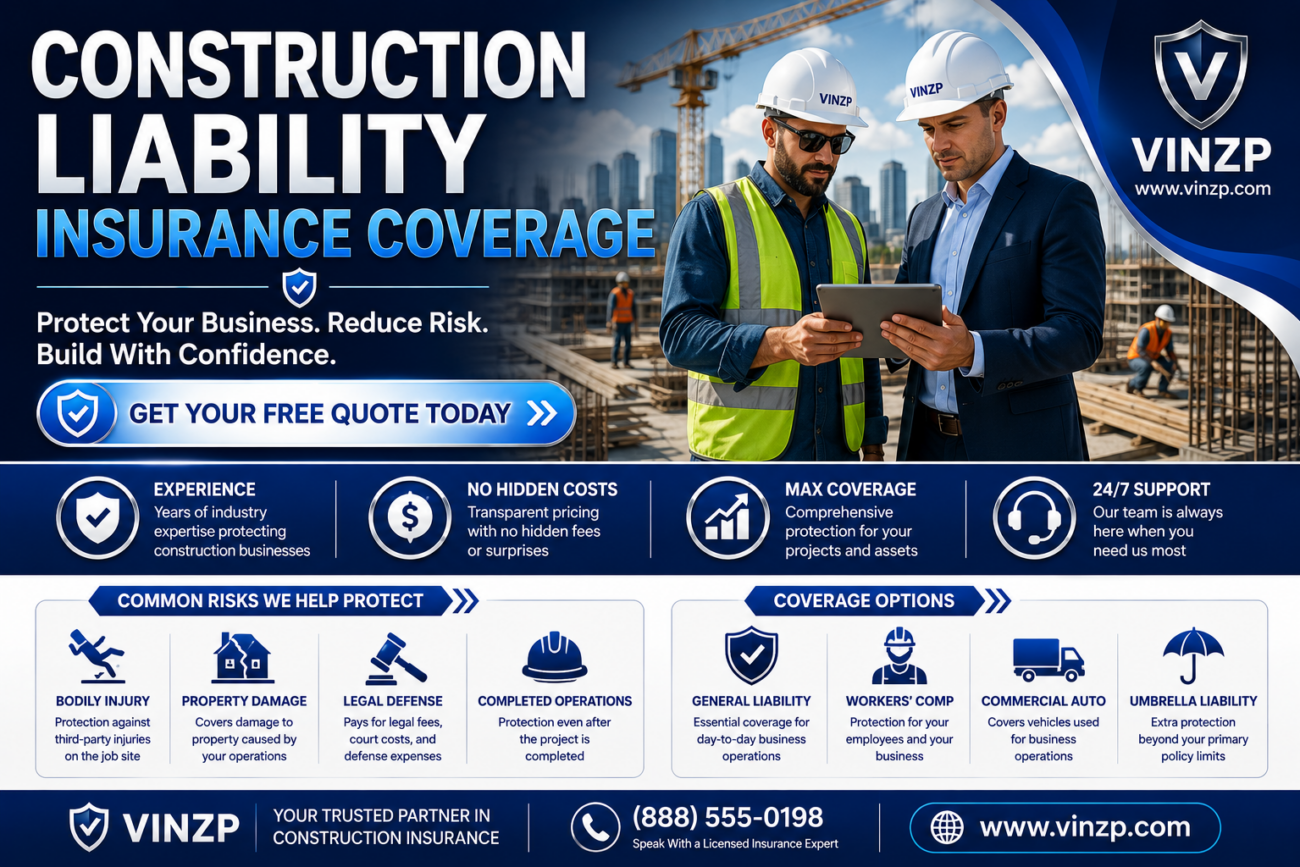
Construction Liability Insurance Coverage: Complete Protection for Contractors
The construction industry remains one of the highest-risk sectors in the United States. Every project involves workers, equipment, subcontractors, clients, materials, and unpredictable job-site conditions. Even with strong safety procedures, accidents can happen unexpectedly. A single lawsuit, injury claim, or property damage incident can create financial losses that threaten the future of a business. This is why construction liability insurance coverage has become an essential investment for contractors, builders, developers, subcontractors, and construction firms of all sizes. Proper coverage helps protect businesses from costly claims while maintaining compliance with client contracts and industry standards. Whether you’re managing residential renovations, commercial developments, infrastructure projects, or specialty contracting services, understanding liability protection is critical for long-term success.Why Construction Liability Insurance Coverage Matters
Construction projects involve numerous risks that can lead to legal action. Third parties may suffer injuries, neighboring properties may be damaged, or project-related mistakes could create expensive claims. Without adequate insurance protection, a contractor may be forced to pay legal costs, settlements, and repair expenses out of pocket. Construction companies often combine liability protection with broader risk-management solutions such as Small Business Insurance Comparison strategies to ensure complete business protection.What Construction Liability Insurance Coverage Typically Includes
Bodily Injury Protection
If a third party suffers an injury at a job site, the policy may help cover medical expenses, settlements, and legal defense costs.Property Damage Coverage
Construction activities can accidentally damage neighboring buildings, vehicles, utilities, or other property. Insurance helps manage these financial risks.Legal Defense Costs
Even if a contractor is not found liable, defending a lawsuit can be extremely expensive. Coverage often includes attorney fees, court expenses, and related legal costs.Personal and Advertising Injury
Certain policies include protection against claims involving libel, slander, copyright issues, and advertising disputes.Completed Operations Coverage
Protection may continue after project completion if workmanship issues result in damages or claims.Who Needs Construction Liability Insurance Coverage?
Virtually every construction-related business can benefit from liability protection.- General Contractors
- Residential Builders
- Commercial Builders
- Electrical Contractors
- Plumbing Contractors
- Roofing Companies
- HVAC Installers
- Landscaping Contractors
- Excavation Companies
- Concrete Contractors
- Remodeling Specialists
- Subcontractors
Common Construction Liability Claims
Job Site Injuries
Visitors, vendors, or clients may sustain injuries while visiting active construction sites.Property Damage
Equipment, debris, or construction activities may unintentionally damage nearby structures.Falling Objects
Tools or materials can cause injury or property damage if proper safety measures fail.Structural Issues
Construction defects discovered after project completion can generate substantial claims.Water Damage
Improper installations or accidental incidents can lead to extensive property losses.Benefits of Construction Liability Insurance Coverage
Financial Protection
Insurance helps protect company assets against unexpected lawsuits and claims.Business Credibility
Clients often view insured contractors as more professional and trustworthy.Contract Compliance
Many construction agreements require liability insurance before work begins.Risk Management
Coverage supports long-term business stability despite industry uncertainties.Peace of Mind
Owners can focus on project execution rather than worrying about every potential liability exposure.Additional Policies Contractors Should Consider
While liability insurance is important, contractors often need multiple policies to create a complete protection strategy.Commercial Auto Insurance
Protects company vehicles used for business operations.Workers’ Compensation Insurance
Covers employee injuries and workplace accidents.Builder’s Risk Insurance
Protects structures under construction from covered losses.Umbrella Liability Coverage
Provides additional protection beyond standard policy limits. Businesses with larger fleets may also benefit from solutions such as Commercial Truck Insurance Companies coverage options for transportation-related risks.Factors Affecting Insurance Costs
Premiums vary depending on several risk factors.- Business size
- Annual revenue
- Number of employees
- Claims history
- Project type
- Coverage limits
- Geographic location
- Safety programs
How Much Coverage Is Enough?
Coverage needs vary based on business operations and contractual obligations. Common limits include:- $500,000
- $1 Million
- $2 Million
- $5 Million
- $10 Million+
Reducing Liability Risks on Construction Sites
Implement Safety Training
Ongoing employee education reduces accidents and claim frequency.Maintain Documentation
Accurate records help support legal defenses if disputes arise.Conduct Site Inspections
Regular inspections identify hazards before they cause incidents.Verify Subcontractor Insurance
Ensure all subcontractors carry adequate coverage.Use Strong Contracts
Clearly defined responsibilities reduce misunderstandings and disputes.How Claims Are Handled
When an incident occurs, contractors should immediately document the situation and notify their insurance provider. Quick reporting can help preserve evidence and improve claim outcomes. The insurer typically investigates the claim, evaluates liability, negotiates settlements when appropriate, and coordinates legal defense efforts if litigation becomes necessary.The Future of Construction Insurance
Technology, automation, and evolving regulations continue to reshape risk management within the construction industry. Emerging trends include:- Drone-based inspections
- Smart job-site monitoring
- Predictive safety analytics
- Higher liability limits
- Cybersecurity protection for contractors
- Enhanced contractor compliance requirements
Conclusion
Construction liability insurance coverage serves as a critical safeguard for contractors and construction companies operating in today’s complex business environment. From bodily injury claims and property damage to legal defense costs and completed operations disputes, comprehensive protection helps businesses survive costly incidents and maintain long-term growth. Investing in the right coverage not only protects financial assets but also enhances credibility, supports contract compliance, and strengthens overall business resilience.Frequently Asked Questions
Is liability insurance required for contractors?
Many states, clients, and licensing boards require contractors to maintain liability insurance.Does liability insurance cover employee injuries?
Employee injuries are generally covered under workers’ compensation insurance rather than liability policies.Can subcontractors use the contractor’s policy?
Subcontractors usually need their own insurance unless specifically covered under contract terms.Does coverage continue after project completion?
Completed operations coverage may provide protection for claims arising after work has been finished.How often should contractors review coverage?
Businesses should review policies annually and whenever significant operational changes occur.Get the Right Protection for Your Construction Business
Compare coverage options, reduce risk exposure, and secure the protection your projects deserve. Get Your Free Quote Today🔥 Canva Premium GRATIS 1 Bulan — FULL AKSES 🔥
⚠ Password hanya dibagikan di video ini:
👉 @OM Koboi
⏳ Tunggu 60 detik untuk membuka akses
🔐 Masukkan Password:
❌ Password salah. Periksa lagi dengan teliti.
💬 Sudah banyak yang berhasil akses ✔
⚠ Yang gagal biasanya tidak membaca dengan teliti
⚠ Yang gagal biasanya tidak membaca dengan teliti
