
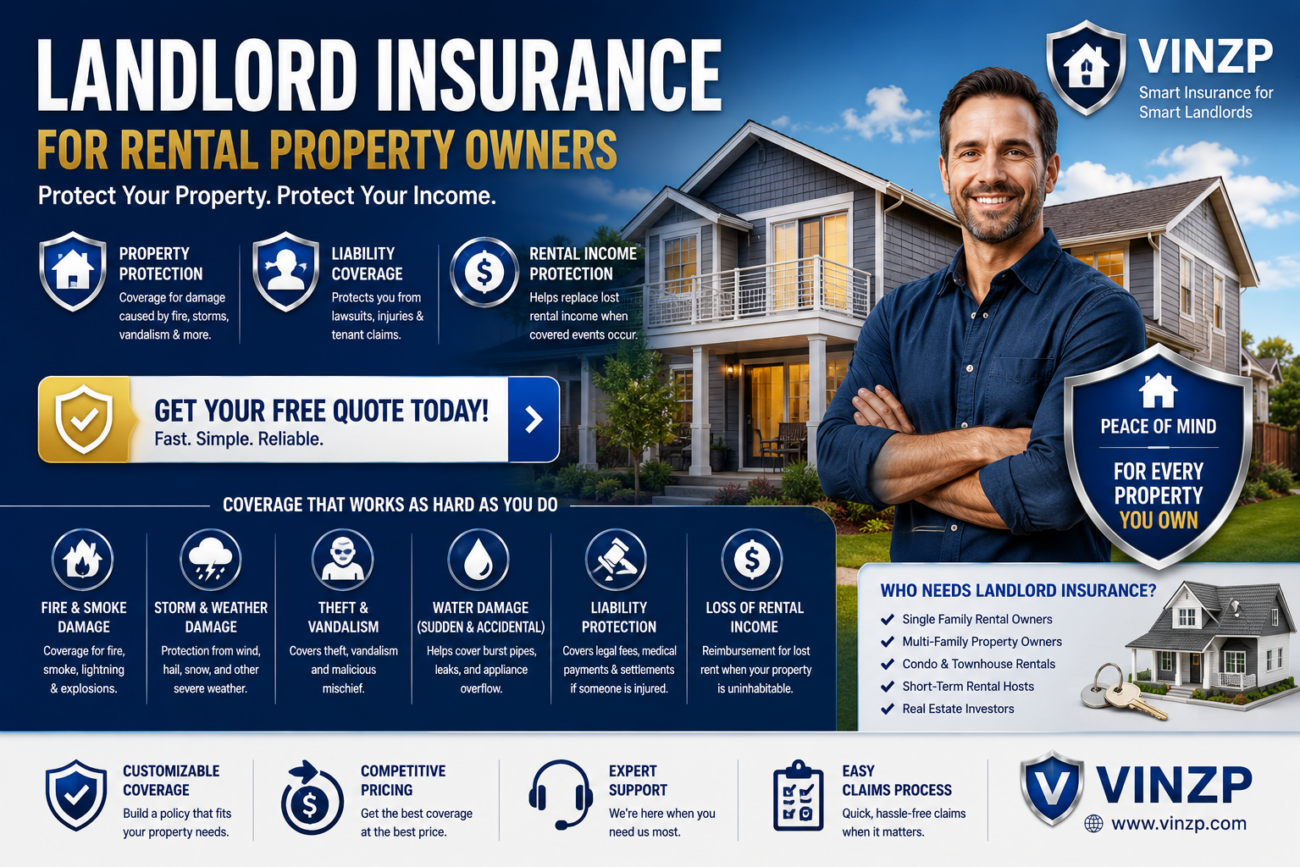
Landlord Insurance for Rental Property Owners
Owning rental property can be one of the most effective ways to build long-term wealth, generate passive income, and diversify an investment portfolio. However, rental properties also come with significant risks. Property damage, liability lawsuits, tenant disputes, natural disasters, and unexpected vacancies can create major financial challenges for landlords. This is where landlord insurance for rental property owners becomes essential. Unlike standard homeowners insurance, landlord insurance is specifically designed to address the unique risks associated with renting residential or commercial property. Whether you own a single rental home, multiple apartment units, duplexes, vacation rentals, or investment properties, understanding the right insurance coverage can help protect your assets and income for years to come.Why Landlord Insurance for Rental Property Owners Matters
Many property investors mistakenly assume their homeowners insurance policy provides sufficient protection once a property is rented. Unfortunately, most homeowners policies are designed for owner-occupied residences and may not adequately cover rental-related risks. Landlords face numerous exposures, including:- Property damage from fire, storms, and vandalism
- Tenant-related accidents
- Liability lawsuits
- Loss of rental income
- Legal expenses
- Equipment breakdowns
- Building repairs
- Natural disasters
What Landlord Insurance for Rental Property Owners Covers
Property Damage Protection
Property coverage helps pay for repairs or rebuilding costs when covered events damage rental structures. Common covered risks may include:- Fire
- Lightning
- Windstorms
- Hail
- Vandalism
- Certain water damage incidents
Liability Protection
If a tenant or visitor suffers an injury on the property and claims negligence, liability coverage may help pay legal expenses, settlements, and court-awarded damages.Loss of Rental Income
When a covered event makes the property temporarily uninhabitable, insurance may reimburse lost rental income during repairs.Other Structures Coverage
Detached garages, fences, storage sheds, and similar structures may also be covered under qualifying policies.Benefits of Landlord Insurance for Rental Property Owners
Asset Protection
Rental properties often represent substantial investments. Insurance helps preserve these valuable assets.Income Stability
Rental income protection helps maintain cash flow after covered losses.Legal Protection
Liability claims can become extremely expensive. Insurance helps reduce financial exposure.Mortgage Compliance
Many lenders require rental property insurance throughout the life of a mortgage.Peace of Mind
Property owners can focus on managing investments instead of worrying about unexpected losses.Common Risks Rental Property Owners Face
Tenant Injuries
Slip-and-fall accidents, stairway incidents, and maintenance-related injuries frequently lead to claims.Fire Damage
Electrical issues, cooking accidents, and heating equipment failures can cause severe losses.Water Damage
Leaking pipes, burst plumbing systems, and appliance malfunctions may create costly repairs.Vandalism
Vacant rental properties can become targets for vandalism and theft.Severe Weather
Storms, hail, hurricanes, and other natural events can damage buildings and reduce rental income.Coverage Options to Consider
Building Coverage
Protects the physical structure of the rental property.Personal Property Coverage
Protects landlord-owned items such as appliances, maintenance equipment, and furnishings.Umbrella Liability Insurance
Provides additional protection above standard liability limits.Flood Insurance
Standard policies typically exclude flood damage, making separate coverage important in high-risk areas.Equipment Breakdown Coverage
Helps cover repair costs for systems such as HVAC units and electrical equipment.How Much Coverage Do Landlords Need?
Coverage requirements vary depending on property value, location, tenant profile, and investment strategy. Factors to evaluate include:- Replacement cost of the property
- Rental income levels
- Number of units
- Property age
- Local liability risks
- Mortgage requirements
Factors That Affect Premium Costs
Property Location
Areas prone to severe weather or higher crime rates often have higher premiums.Property Condition
Well-maintained properties may qualify for better insurance pricing.Claims History
Previous claims can affect future premiums.Coverage Limits
Higher protection levels generally increase insurance costs.Property Type
Multi-family properties may carry different risk profiles than single-family rentals.Risk Management Tips for Landlords
Perform Regular Inspections
Routine inspections help identify maintenance issues before they become major problems.Screen Tenants Carefully
Background checks and rental history reviews can reduce potential risks.Maintain Detailed Records
Accurate documentation supports claims and legal defense efforts.Upgrade Safety Features
Smoke detectors, security systems, and proper lighting can reduce liability exposure.Review Insurance Annually
Coverage should evolve alongside property values and market conditions. Many landlords also compare protection options through resources such as Homeowners Insurance Quotes when evaluating overall property insurance strategies.Landlord Insurance vs Homeowners Insurance
Occupancy Differences
Homeowners insurance is intended for owner-occupied residences, while landlord insurance is designed for rental properties.Income Protection
Landlord policies may include rental income protection, which standard homeowners policies typically do not provide.Liability Exposure
Rental properties often face higher liability risks because tenants and visitors regularly access the premises.The Future of Rental Property Insurance
Technology continues transforming property management and insurance practices. Emerging trends include:- Smart home monitoring systems
- AI-driven risk assessment
- Remote property inspections
- Usage-based insurance models
- Enhanced weather analytics
- Improved fraud prevention tools
Conclusion
Landlord insurance for rental property owners is a critical investment for protecting real estate assets, rental income, and long-term financial success. From property damage and liability claims to rental income protection and legal defense costs, the right policy helps landlords manage risks with confidence. By understanding available coverage options, evaluating property-specific risks, and reviewing policies regularly, rental property owners can build a stronger foundation for sustainable investment growth.Frequently Asked Questions
Does landlord insurance cover tenant belongings?
No. Tenants typically need their own renters insurance to protect personal property.Can landlord insurance cover loss of rent?
Many policies include rental income protection when a covered loss makes the property uninhabitable.Is landlord insurance tax deductible?
Insurance premiums are often considered a business expense, but landlords should consult tax professionals for guidance.Do all landlords need liability coverage?
Liability protection is strongly recommended because lawsuits can result in significant financial losses.How often should insurance coverage be reviewed?
Annual reviews help ensure coverage remains aligned with property values and investment goals.Protect Your Rental Investment Today
Compare landlord insurance options and secure comprehensive coverage for your rental properties. Get Your Free Quote Today🔥 Canva Premium GRATIS 1 Bulan — FULL AKSES 🔥
⚠ Password hanya dibagikan di video ini:
👉 @OM Koboi
⏳ Tunggu 60 detik untuk membuka akses
🔐 Masukkan Password:
❌ Password salah. Periksa lagi dengan teliti.
💬 Sudah banyak yang berhasil akses ✔
⚠ Yang gagal biasanya tidak membaca dengan teliti
⚠ Yang gagal biasanya tidak membaca dengan teliti
